

Quick Quiz: What’s Your Gas-Saving Style?
Answer step by step. Your result will appear at the end.
For many U.S. households, natural gas remains one of the largest recurring utility costs, particularly in colder regions. According to the U.S. Energy Information Administration (EIA), roughly 60 million U.S. households rely on natural gas as their primary heating fuel. As of 2023, the residential sector consumes about 4.5 trillion cubic feet of natural gas annually (approximately 14% of total U.S. gas use). After a surge in prices in 2022, costs have leveled off – the EIA projects that the average home’s gas heating expenses for winter 2024–25 will be about the same as last winter (only ~1% higher year-over-year). Without strategic planning, however, these bills can still quietly eat up a significant share of your disposable income.
The challenge lies not just in usage but in inefficiencies - outdated equipment, poor insulation, and habits that increase demand without adding comfort. Even small changes in thermostat settings, hot water consumption, or system maintenance have measurable effects on overall costs.
The reality is that most households overspend because they underestimate how behavioral and structural improvements impact gas efficiency.
Understanding how to save on gas bill requires a data-driven approach: identify where the majority of gas consumption occurs, apply targeted strategies, and leverage technology for tracking. This approach empowers households to cut expenses significantly while maintaining comfort and reliability throughout the year.
Listen to the article - it is faster than reading!
The Real Cost Breakdown: Where Gas Usage Comes From
Gas consumption at home is not evenly distributed. A handful of functions dominate energy use, while smaller appliances account for only a fraction. To design a cost-saving plan, homeowners must first recognize where their gas budget flows. Indeed, space heating dominates home gas usage - accounting for roughly 60-65% of the typical household’s gas consumption - followed by water heating at around 20-25%. The remaining fraction (well under 20%) goes to all other gas appliances like stoves, dryers, or pool heaters. In other words, heating and hot water are by far the primary drivers of your gas bill, which means those are the first places to look for savings. Cooking, laundry, and cooling are minor in comparison, yet their inefficiencies can still drive noticeable waste. Additional appliances such as pool heaters or gas generators, though less common, also raise bills.
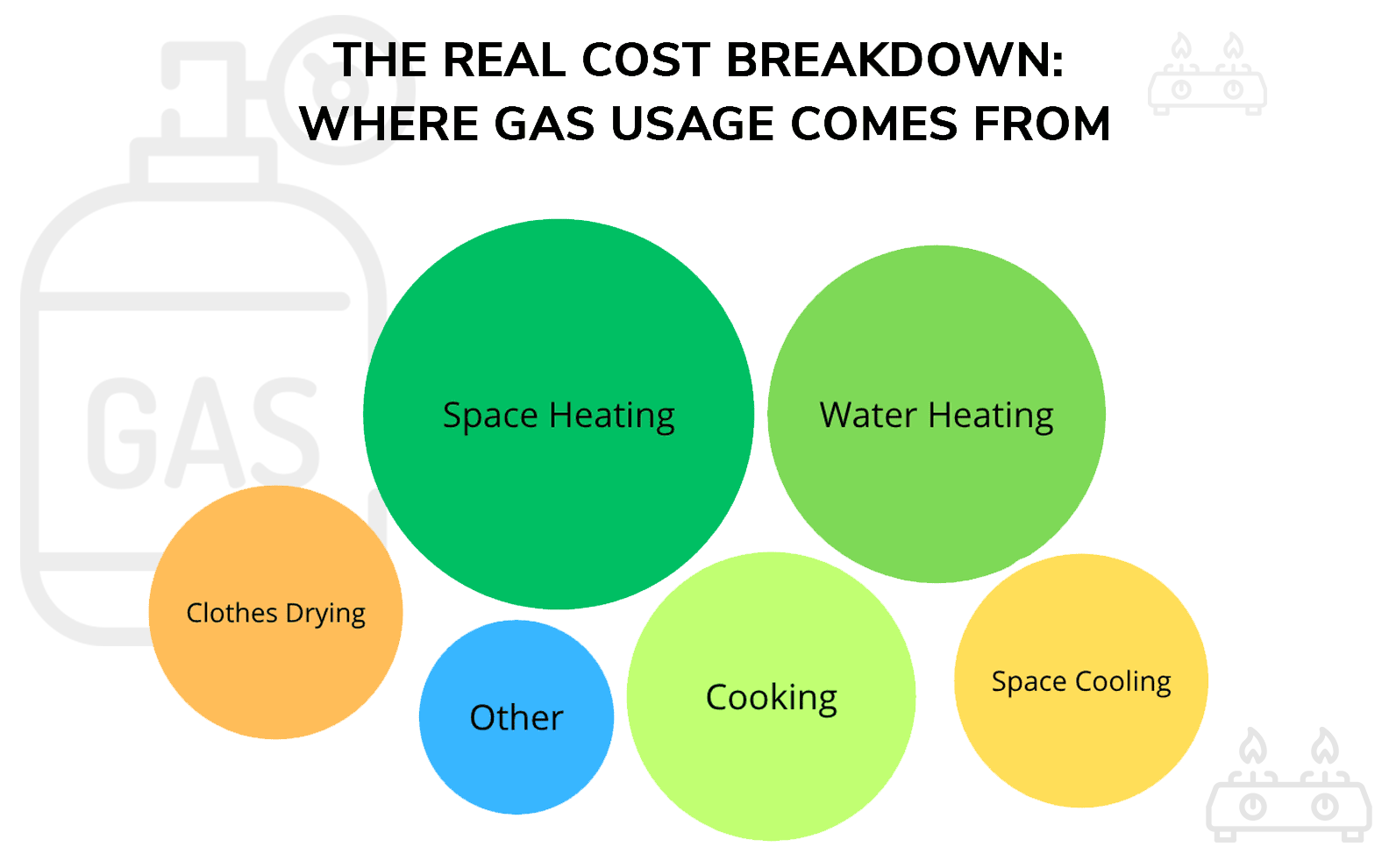
A clear breakdown highlights the real drivers of energy costs:
-
Space Heating
Heating is by far the largest category, consuming nearly two-thirds of residential gas. Cold climates and poorly insulated homes raise demand. Thermostat management, zoning, and insulation upgrades directly influence this portion. -
Water Heating
Water heaters run daily, often at unnecessarily high temperatures. Showers, dishwashers, and laundry cycles increase consumption. Lowering the heater setting and upgrading to efficient models reduce long-term costs. -
Cooking (Stoves/Ovens)
Though small in percentage, inefficient gas stoves or prolonged cooking habits add to monthly bills. Using lids, preheating effectively, and combining cooking sessions help reduce usage. -
Space Cooling (Gas-powered AC)
Gas-powered cooling systems are rare but costly where installed. Maintenance and correct sizing prevent overuse. -
Clothes Drying
Gas dryers use modest amounts of energy but are still less efficient when run frequently. Full loads and sensor-based drying cycles minimize waste. -
Other Gas Appliances
Outdoor grills, pool heaters, generators, and decorative gas lighting make up a surprising share. While not everyday essentials, their use spikes bills when left unchecked.
Together, these categories explain most of household gas spending, showing clearly how to save money on gas bill starts with heating, hot water, and insulation.

We are recommend
Utility Bill Negotiation Script Helper
Want to cut your monthly expenses? Use this tool to take control of your next call with a service provider. This interactive tool helps you confidently ask for lower rates, remove unnecessary fees, or request loyalty discounts - all with the right words and tone. Instead of guessing what to say, you'll get a personalized negotiation script that sounds natural, polite, and persuasive. With expert-backed phrasing and practical advice, this tool turns an ordinary customer call into a real opportunity to save money - without stress or awkward moments.
Top-5 Practical Expert Strategies to Save on Gas Bill in House
Smart savings come from disciplined moves, not guesswork. Treat your gas spend like a system: target the biggest loads, install controls that enforce habits, and verify results with data. Start where heat is lost fastest (envelope and water temperature), then lock in efficiency with maintenance and zoning. Every tactic below converts engineering principles into predictable reductions on your utility statement. Apply them together for compounding effects across winter months. Track outcomes monthly so improvements stick and drift doesn't return.
Lower and Optimize Thermostat Settings
Thermostat discipline delivers immediate, measurable results because demand for space heating rises non-linearly as indoor-outdoor temperature gaps widen. The U.S. Department of Energy (DOE) specifically recommends setting your thermostat around 68°F when you’re home and awake, and then lowering it by about 7-10°F for ~8 hours overnight or while away - a practice that can trim annual heating costs by roughly 10% without sacrificing comfort. Programmed setbacks during sleep/work hours ensure you’re not paying to heat empty rooms. A smart or learning thermostat can automate this routine and keep you on track via energy-use reports. Pair these schedules with realistic comfort habits (wearing warm layers, using rugs, stopping drafts) so you don’t chase minor chills with major fuel use. Pair schedule control with realistic comfort standards (warm layers, rugs, draft control) so you don't chase minor chills with major fuel use. If you want a single lever that proves how to save on your gas bill, this is it.
Estimated annual savings: $150-$300 (typical detached U.S. home, cold climate).
- Per-degree impact: Each °F you reduce shrinks burner runtime 1-3%, cutting fuel without new hardware.
- Smart scheduling: Automated setbacks stop “heat left on” losses during sleep/work hours.
- Rapid correction: Remote control prevents waste after schedule changes or forgotten adjustments.
- Behavior alignment: Energy reports and nudges reinforce habits that keep bills down.
Improve Home Insulation and Seal Air Leaks
Your building envelope determines how hard your furnace must work. Air leaks and thin insulation let conditioned air escape and cold air infiltrate, forcing longer heat cycles. Sealing gaps at sill plates, window/door casings, and penetrations (cable, plumbing, vents) reduces uncontrolled airflow. According to ENERGY STAR, improving your home’s envelope - by sealing air leaks and adding insulation (especially in the attic) - can typically cut heating costs by around 15% in an average home. In houses that were very poorly insulated to begin with, the savings can be far greater - potentially on the order of 30-40% after comprehensive sealing and insulation upgrades. In practical terms, this means sealing gaps (at sill plates, around windows/doors, and where pipes or wires penetrate walls) and installing adequate insulation. These steps reduce the furnace’s workload by keeping warm air inside and cold air out. The goal is to turn a drafty house into a tight, stable environment so you pay to heat your living space - not the outdoors.
Estimated annual savings: $400-$700 (higher in very cold regions or severely under-insulated homes).
- Tight envelope: Air-sealing stops infiltration that drives constant reheating.
- Attic priority: Added R-value in the attic retains heat where losses concentrate.
- Window/door fixes: Weatherstripping and caulk stop perimeter leaks inexpensively.
- Balanced system: Reduced leakage shortens burner cycles and stabilizes room temps.
Maintain Heating Systems Regularly
Combustion heating systems (furnaces, boilers) drift out of tune without regular maintenance, causing them to burn more gas for the same heat. Something as simple as skipping your furnace’s annual tune-up can lower its efficiency by around 5%, meaning higher fuel usage to reach the same temperature. To prevent this, replace or clean furnace filters monthly during heating season - a dirty filter raises airflow resistance, reduces heat transfer, and forces longer burner cycles. Schedule a professional service visit yearly as well: a technician will clean and adjust the burner, check the heat exchanger and flue, verify gas pressure, and recalibrate controls. Each of these steps helps the furnace maintain its rated AFUE (efficiency) and operate safely. Technicians also catch issues like failing igniters or soot buildup early, before they inflate your bills or cause breakdowns. In short, regular maintenance preserves efficiency (and keeps carbon monoxide risks in check), delivering the same warmth with less gas.
Estimated annual savings: $120-$250 (plus avoided repair costs and extended equipment life).
- Airflow restored: Clean filters and blower care improve heat exchange at the coil/heat exchanger.
- Combustion tuned: Proper gas pressure and clean burners convert fuel into heat efficiently.
- Early fixes: Finding worn parts prevents inefficient operation and costly breakdowns.
- Control accuracy: Thermostat and sensor checks stop overshoot and short-cycling.
Reduce Hot Water Usage
Experts universally advise turning down your water heater to around 120°F for optimal efficiency and safety. Most water heaters are factory-set to 140°F, but lowering to 120°F reduces the standby heat loss significantly - cutting water heating energy costs by roughly 6-10%. The U.S. DOE estimates that for a family of four, this simple change saves about $36-$61 per year on gas bills on average. In addition, you’ll reduce scalding risk without noticing any difference in comfort (120°F still provides plenty of hot water for showers and chores). Combine a lower thermostat setting with other measures: take shorter showers (or swap some baths for showers), install efficient low-flow showerheads (1.5-2.0 GPM), and only run dishwashers or laundry with full loads on cold/eco cycles. Also consider insulating the first few feet of hot water pipes and adding an insulation blanket to an older tank - these steps further cut standby losses. Fix any drippy hot-water faucets, too, since even a slow leak wastes heated water 24/7. All together, these actions mean fewer burner cycles for the same hot water comfort.
Estimated annual savings: $150-$400 (family size and usage patterns drive variability).
- Lower setpoint: Reduces burner firing and standby losses without sacrificing function.
- Efficient fixtures: Low-flow heads cut hot-water volume while keeping shower quality high.
- Load discipline: Full dishwasher/washer cycles avoid reheating water for half-loads.
- Loss reduction: Pipe/tank insulation keeps delivered water warm with less reheating.
Heat Only Occupied Spaces
Whole-house heating treats every room as equally valuable; your budget disagrees. You can also focus heat only where it’s needed. Close doors to seldom-used rooms and concentrate warmth in the areas people occupy. For example, use draft stoppers and area rugs to create smaller warm zones (or “thermal islands”) in occupied rooms. In those cozy spaces, you might rely on personal warmth solutions - wearing a thick blanket or using a heated throw - when you’re sitting still for long periods. The idea is to stay comfortable in occupied spots while dialing down the heat in empty areas. Align your heating schedule and thermostat zones with your daily routine, so you’re not paying to heat rooms nobody is using. In short, engineer the heat delivery to match where people actually are, instead of uniformly heating every empty corner of the house.
Estimated annual savings: $200-$350 (more in homes with many seldom-used rooms).
- Targeted delivery: Directs fuel to lived-in areas instead of empty square footage.
- Door discipline: Contained zones hold heat longer, shortening burner runtime.
- Schedule matching: Timers and zoning ensure rooms warm only when in use.
- Personal warmth: Localized heat keeps people comfortable at a lower house setpoint.
Real Cases: Households That Reduced Their Gas Bills
Myths and Realities: What Really Impacts Your Gas Bill
Households often follow rules of thumb that sound convincing but have little basis in fact. These myths circulate through neighbors, social media, and even outdated advice from decades ago. Unfortunately, believing in them leads to poor energy decisions and unnecessary costs every winter. To understand how to save on the gas bill, it's important to separate the myths from the realities and apply evidence-based practices. Below is a breakdown of six common misconceptions, paired with detailed explanations of the truth behind them.
| Myth | Reality (Debunking) |
|
“Leaving the heat on all day is cheaper than turning it down.” Many people think that lowering the thermostat and then reheating the house later uses more energy than keeping a constant warm temperature. This belief is especially common among households with older heating systems. |
Turning the heat down always saves money. Heating systems don't work harder to “catch up”; they operate at the same rate regardless of temperature difference. Keeping your thermostat at a lower setting while you're away reduces overall run-time and fuel consumption. Smart thermostats automatically adjust, leading to annual savings of up to 10%. Maintaining constant high heat only ensures you burn gas all day for empty rooms, a classic case of waste disguised as comfort. |
|
“Closing vents in unused rooms reduces heating costs.” Families often close registers or vents in empty bedrooms or basements believing it concentrates warm air where it's needed. It seems logical: less space to heat should mean less energy used. |
Closing vents can backfire. Modern forced-air systems rely on balanced airflow. When vents are closed, air pressure rises in ducts, forcing the system to work harder and potentially causing leaks or equipment strain. Instead, zone control systems or separate thermostats should be used. Alternatively, reduce radiator settings or close doors to underused rooms - methods that actually cut costs without damaging your system. |
|
“Cranking up the thermostat heats the house faster.” A common assumption is that setting the thermostat to 80°F will warm the house more quickly than setting it to 68°F. People believe furnaces blast harder at higher settings. |
Furnaces don't accelerate output. Your system heats at a constant rate. Setting the thermostat higher only keeps it running longer, overshooting the desired temperature and wasting gas. The fastest way to warm a house is to set the thermostat to your target temperature and let the system stabilize. Cranking it higher has no effect on speed - just on cost and discomfort when the house overheats. |
|
“Gas appliances are efficient without maintenance.” Many households assume furnaces, boilers, and water heaters don't require regular service. As long as they run, people think they're performing efficiently. |
Neglected systems waste fuel. Dusty filters, dirty burners, and failing parts force appliances to consume more gas for the same output. Efficiency drops 10-15% when maintenance is ignored. Annual inspections, tune-ups, and monthly filter changes keep combustion efficient, reduce bills, and extend equipment lifespan. Skipping maintenance only guarantees higher costs and a greater risk of breakdowns. |
|
“Lowering water heater temperature is unsafe and barely saves money.” Some homeowners keep water heaters at 140°F, thinking that anything lower risks bacteria growth or cold showers. They also assume savings are negligible. |
120°F is safe, efficient, and cost-effective. The U.S. Department of Energy recommends 120°F for health and efficiency. At this level, scald risk is reduced, showers remain comfortable, and standby losses decrease significantly. For a family of four, lowering from 140°F to 120°F can save $30-$60 annually. Combined with shorter showers and low-flow heads, the impact is even larger. |
|
“Space heaters are always cheaper than central heating.” Many people assume running a portable gas or electric heater is more efficient than central systems. The reasoning is that it heats only the occupied room. |
Space heaters can cost more. Used sparingly in a single room, they can be efficient. But relying on multiple units throughout the house often uses more energy than central heating, especially if doors remain open and heat escapes. Central systems are designed for whole-home efficiency; supplement with localized heating only when you can reduce thermostat settings elsewhere. Otherwise, costs rise instead of fall. |
Digital Tools and Apps to Track and Save Money on Gas Bill
Technology has made it easier than ever to understand where your household energy goes and how to control it. Traditional bills only show totals, but modern apps and smart sensors break consumption down by appliance, time of day, and usage pattern. These insights help families identify the real cost drivers, adjust behaviors, and confirm whether efficiency upgrades are paying off. The most effective tools also allow remote control, automation, and budgeting features to keep spending predictable. If you've ever asked yourself how can i save on my gas bill, the answer often starts with data - and these digital tools deliver exactly that.
- Smappee. It's uses clip-on sensors to provide real-time tracking of energy consumption, including gas. It pinpoints which appliances consume the most and displays usage costs in easy-to-read dashboards. The app also offers remote control for connected systems, giving households the ability to cut waste instantly when they notice inefficiencies. For families who want detailed, actionable insights, Smappee transforms gas bills into transparent, controllable expenses.
- Power Cost Monitor - Energy Cloud. This system wirelessly monitors household energy usage and transmits data to both online dashboards and mobile apps. Installation is simple, and once activated, it shows how much gas is being used at any given time. The biggest advantage is visibility: users can see how habits like longer showers or thermostat changes impact bills in real time. By highlighting patterns, Energy Cloud empowers households to eliminate hidden waste quickly.
- Nest Mobile (with Nest Learning Thermostat). Nest's app integrates directly with its smart thermostat to give homeowners full remote control of indoor temperature. It also provides energy history, showing when and how much heating occurred. Families can fine-tune schedules, adjust heating while away, and optimize efficiency through automated learning. The convenience of monitoring and adjusting from anywhere ensures you never pay for heating an empty home again.
- Polaris Smart Gas Meter App. Built for prepaid gas meter users, Polaris offers full transparency into consumption. It shows real-time usage, trends, and billing details while allowing users to recharge accounts directly from the app. By tracking balances and gas usage simultaneously, it prevents bill surprises and encourages smarter consumption habits. For households on tight budgets, this level of control is especially valuable.
- Meter Readings App. This straightforward tool allows manual input of meter data and produces clear charts of usage over time. It tracks changes, highlights anomalies, and provides cost trends that help users understand their monthly bills. While simple, it's highly effective for those who want to develop awareness and identify waste patterns without investing in advanced smart systems.
- HomeWizard Energy. It offers instant usage feedback paired with historical data analysis. The app shows daily, weekly, and monthly consumption, making it easy to track progress after upgrades like insulation or thermostat changes. Its intuitive design ensures households can quickly spot where money is being lost and adjust accordingly. This makes it one of the most user-friendly tools for ongoing savings management.

We are recommend
Smart Monthly Savings Calculator
Want to know if your savings plan is realistic? Our Smart Savings Calculator shows how much you can set aside each month, how close you are to reaching your goal, and what small changes could accelerate your progress. Built by our financial expert Henry Trent, it explains results in plain language, offers practical tips, and keeps all data private on your device. Try it now and see your financial path with clarity.
Conclusion
Lower gas bills come from disciplined, repeatable actions - not guesswork. Start with the high-impact moves that reset your baseline: thermostat optimization, envelope upgrades (air sealing and attic insulation), regular system maintenance, hot-water discipline, and targeted heating of occupied rooms only. These steps reduce burner runtime, stabilize indoor temperatures, and keep comfort intact. Track results monthly so wins persist, not just during the first cold snap.
Layer technology on top of good habits. Smart thermostats enforce schedules and setbacks; usage apps surface waste in real time; a simple meter-reading log verifies progress. Treat every change like a mini-pilot: set a clear target, implement, measure, and keep what works. This approach converts one-time tips into a durable operating system for your home.
Finally, keep ROI in view. Insulation and sealing pay back through 30-40 % lower heating demand; maintenance preserves efficiency and extends equipment life. With a clear plan and basic tracking, your gas bill turns from a volatile expense into a managed cost - proof that financial control and home comfort align when you execute the fundamentals well.
Frequently Asked Question
How to Save Money on Gas Bill in Winter?
Winter savings come from attacking heat loss and tightening control. Set a firm thermostat strategy: 68°F (20°C) while awake, lower during sleep and away periods. Each degree you reduce trims roughly 1-3% from heating costs, and well-timed setbacks add up to ~10% annually. Air-seal obvious leaks at windows, doors, and sill plates, then prioritize attic insulation so rising heat stays indoors. Replace furnace filters monthly in heating season and book an annual tune-up to keep combustion efficient and airflow unobstructed. Drop water-heater setpoint to 120°F (49°C), install low-flow showerheads, and run only full laundry and dishwasher loads. Heat only the spaces you use: close doors to seldom-used rooms, lower setpoints there, and rely on localized comfort (wearable blankets, heated throws) instead of raising the whole-home temperature. Track usage weekly with a meter log or app; quick feedback locks in habits and prevents drift. Execute these steps together and your winter bill declines predictably without sacrificing comfort.
What is The Cheapest Temperature to Set Your Thermostat in Winter?
Aim for 68°F (20°C) during occupied hours, then schedule setbacks to 60-62°F while asleep or away. This balance protects comfort while harvesting the strongest savings: every 1°F reduction cuts heating use by about 1-3%. Keep doors to unused rooms closed and concentrate heat where people actually spend time; this allows the whole-home setpoint to stay lower. Pair the setpoint with practical comfort boosters - layered clothing, area rugs, draft stoppers, and hot beverages - so nobody reaches for the thermostat reflexively. Maintain consistent humidity within a healthy range and replace furnace filters monthly to keep airflow efficient at lower temperatures. In very cold regions, maintain a minimum of ~55-60°F for pipe protection during long absences, and use a smart thermostat for timed warm-ups before you return. Treat 68°F as the default, not a ceiling: if your family stays comfortable at 66-67°F with the upgrades above, lock it in and enjoy the linear savings on every billing cycle.
Do Smart Thermostats Really Lower Gas Bills?
Yes - when used as intended. Smart thermostats enforce programmed setbacks automatically, learn occupancy patterns, and prevent “heat left on” waste. They also provide remote control, so you correct settings the moment plans change instead of paying for empty rooms. Energy histories and weekly reports surface waste quickly, prompting fast adjustments. Field results commonly show ~8-12% annual heating savings versus manual control, driven by fewer hours at high setpoints and smoother schedules that avoid overshoot. Integration with room sensors or zoning sharpens control further by aligning heat with occupied spaces. Installation is straightforward for most forced-air systems; for boilers, choose models compatible with your control wiring or add appropriate relays. Combine a smart thermostat with air sealing, clean filters, and a disciplined hot-water strategy to compound gains. The device supplies automation and feedback; your playbook supplies priorities. Together they convert intentions into measurable reductions on the gas portion of your utility bill.
How Much Money Can Insulation Upgrades Actually Save?
Air sealing plus added insulation, especially in the attic, cuts heating demand by roughly 30-40% in under-insulated homes. Translating that into dollars, many detached houses in cold climates see $400-$700 annual savings after sealing rim joists and penetrations, weatherstripping doors, caulking window casings, and bringing attic insulation up to recommended levels. The attic delivers the fastest payback because warm air rises; stopping that upward loss shortens burner cycles across every cold day. A basic sequence works well: schedule an audit or DIY smoke-pencil test to locate leaks, air-seal first (gaps, top plates, chases), then add insulation. Extend the envelope work to knee walls, hatch covers, and bath-fan housings. The benefits go beyond dollars: rooms feel more even, drafts fade, equipment runs quieter and less often, and peak-demand spikes shrink. Document pre/post usage with a simple meter log or utility app; those monthly deltas verify ROI and keep the household committed to efficiency habits that preserve the savings.
Is It Worth Replacing an Old Gas Boiler?
Yes, when age, efficiency, and repair history cross clear thresholds. Older non-condensing boilers often deliver seasonal efficiencies in the 70-80% range; modern condensing units reach 90-95% when installed and controlled correctly. Upgrading can reduce fuel use by 15-20% or more, frequently translating into $500-$1,000 in annual savings for colder-climate homes with significant heating loads. The investment (commonly several thousand dollars including controls and piping adjustments) pays back faster if your current unit needs frequent repairs, short-cycles, or struggles to meet demand. A proper replacement includes a heat-load calculation, right-sizing, outdoor-reset controls, and air-separation for hydronic systems; these details protect efficiency in day-to-day operation. Add envelope improvements (air sealing and attic insulation) to unlock the full benefit - downsized equipment runs longer, steadier cycles at higher efficiency. Track gas usage before and after replacement to confirm savings; the lower and more stable bills, plus improved comfort and safety, validate the decision.
Should I Turn Off Heating When I'm Not Home?
Do not shut heating off in winter; lower it strategically. Set a minimum of ~55-60°F during long absences to protect pipes and building materials, then schedule a pre-return warm-up via a smart thermostat. For daily routines, use programmed setbacks to reduce temperatures while you work or sleep, then restore comfort shortly before occupancy. This approach limits burner hours without inviting moisture or freeze risks. Close doors to unused rooms and lower radiator settings there; pair the setback with envelope fixes (sealing and attic insulation) so rooms rebound quickly when the schedule raises the setpoint. If you travel for multiple days, switch the water heater to vacation mode and verify that drafts are sealed to keep standby losses down. Document the effect with a meter-reading app or your utility dashboard; the consistent drop in daily consumption during away periods confirms that controlled setbacks - not total shutdowns - deliver reliable savings and protect the home in cold conditions.


Olivia Chen
Smart Budgeting Advisor | Helps people master digital tools to budget smarter