

Quick Quiz: Can You Really Control Your Heating Costs?
Answer step by step. Your result will appear at the end.
Heating has quietly become one of the most expensive components of household energy use, and the reasons go far beyond cold seasons or temporary weather changes. Rising energy prices, aging infrastructure, and inefficient equipment are combining to push costs upward year after year. Many homeowners focus on fuel rates but overlook what happens inside their homes - drafts, poor insulation, unbalanced temperature settings, and outdated systems. Each small inefficiency adds up, creating a steady increase in monthly expenses. Understanding how to save on heating bill starts with identifying these invisible losses and building a consistent strategy to control them, not just reacting when bills spike.
The challenge is that heating is not a luxury - it's a necessity. That's why most people accept higher costs as unavoidable. But in reality, a significant portion of household heat is wasted through simple neglect or inefficient habits. An unmaintained boiler, a few unsealed gaps around windows, or an overworked thermostat can each add 10-20% to your total energy consumption. Even newer homes experience heat loss if systems are mismanaged or left unoptimized.
Saving money on heating isn't about drastic sacrifice; it's about precision and awareness.
By optimizing equipment performance, controlling airflow, and managing temperatures intelligently, you can maintain the same comfort level while using far less energy. The key is to treat heating like a system - not just a utility bill - so every adjustment contributes to long-term efficiency and measurable financial results.
Listen to the article - it is faster than reading!
Expert-Backed Practical Tips to Save on the Heating Bill
Reducing heating costs doesn't have to mean sacrificing comfort. In most homes, significant savings come not from one drastic change, but from a combination of smarter controls, insulation upgrades, mindful daily routines, and proper system care. Each of these areas influences how efficiently your home retains and distributes heat. The goal isn't to “use less heat” but to use heat intelligently - keeping warmth where it's needed and eliminating waste wherever possible. Below are expert-endorsed strategies, based on data from the U.S. Department of Energy and HVAC professionals, that consistently deliver measurable results. If you've ever wondered how to save money on heating bill effectively and sustainably, these methods form the foundation.
Thermostat and Heating System Adjustments
Estimated Monthly Savings:$20-$60
Your thermostat is the control center of your heating economy. Small changes in how it operates can have a surprisingly large effect on overall energy use. According to the U.S. Department of Energy, simply turning back the thermostat 7-10°F for 8 hours a day can save up to 10% on annual heating and cooling costs. ENERGY STAR likewise notes that certified smart thermostats cut heating/cooling energy use by roughly 8% on average. Most people maintain higher-than-necessary indoor temperatures simply out of habit, not need. A recommended comfort zone for most households is between 65°F and 70°F, depending on activity level and insulation quality.
Use Smart Thermostats: Smart thermostats optimize energy usage automatically, adjusting heating when you're asleep or away. They learn your schedule and can be controlled remotely, ensuring no heat is wasted on empty rooms.
Implement Zone Heating: Only heat spaces you occupy. Closing doors to unused rooms or installing zoned systems with smart vents helps direct warmth precisely where needed, reducing unnecessary fuel use.
Set Timers: Timed heating cycles align system operation with your lifestyle, maintaining efficiency without manual intervention.
Advantages of This Method:
- Immediate impact on energy bills
- Minimal upfront investment
- Compatible with all heating types
- Increases system lifespan
- Maintains comfort through precision control
Insulation and Sealing Leaks
Estimated Monthly Savings:$25-$75
No heating system, regardless of efficiency, can perform well if your home leaks heat. According to the Department of Energy, up to 25% of heating energy is lost through poorly sealed windows, doors, and ceilings. Adding insulation or storm windows and sealing gaps can significantly cut that loss - for example, low-emissivity storm windows can save 12-33% of heating/cooling energy compared to single-pane windows. In aggregate, EPA estimates that whole-house air sealing and insulation upgrades (including around windows/doors) save roughly 15% on heating and cooling energy. These figures support the claim that sealing and insulating the building envelope (especially windows/doors) can reduce heat loss by on the order of a quarter or more.
Seal Air Leaks: Examine common problem areas like window frames, door thresholds, vents, and cable entry points. Use weatherstripping, caulk, or foam sealant to block gaps and prevent heat escape.
Improve Insulation: Add insulation to attics, crawl spaces, and walls. Even wrapping your hot water pipes and tanks reduces heat loss significantly. Upgrading to modern insulation materials can cut heating demand by nearly 20%.
Use Window Coverings: During daylight hours, open curtains or blinds to let sunlight in; at night, close them to retain warmth. Window films and thermal curtains add an additional barrier against heat transfer.
Advantages of This Method:
- Permanent improvement in energy efficiency
- Increases property value
- Enhances indoor comfort and air quality
- Reduces noise infiltration
- Pays back investment within 2-3 heating seasons
Daily Habits and Smart Practices
Estimated Monthly Savings:$10-$30
The cheapest energy is the energy you don't waste. Behavioral adjustments may seem small, but they add up over time. Many homeowners can lower bills by 5-10% just through smarter daily decisions. Rather than raising the heat, experts suggest bundling up with sweaters or blankets, and using solar gains – e.g. opening curtains on sunny winter days and closing them at night - to warm the home. These official recommendations make clear that everyday adjustments - lower setpoints, solar heating, and clothing choices - measurably reduce energy consumption.
Dress Warmly: Layering clothing, using soft slippers, or investing in an energy-efficient heated blanket keeps you warm without adjusting the thermostat.
Utilize Natural Sunlight: Open blinds on sunny days to allow free solar heat gain. Trim trees or remove exterior obstructions that block sunlight.
Cook and Use Appliances Efficiently: When using ovens or stovetops, leave doors open afterward to distribute residual heat. Run heat-generating appliances like dryers during cooler hours, and wash clothes in cold water to minimize water-heating energy.
Advantages of This Method:
- Zero or minimal cost
- Encourages energy awareness
- Flexible for any home or system
- Complements other efficiency upgrades
- Builds long-term sustainable habits
HVAC Maintenance and High-Efficiency Upgrades
Estimated Monthly Savings:$30-$80
Industry and government sources agree that routine HVAC care markedly improves efficiency. For example, DOE notes that replacing a dirty air filter can lower an air conditioner's energy use by about 5-15%. Similarly, a well-maintained heat pump uses 10-25% less energy than a neglected unit. Upgrading to ENERGY STAR heating equipment also yields gains: certified gas furnaces are roughly 10-15% more efficient than standard models (saving about $120/year on fuel), and high‑efficiency heat pumps outperform conventional furnaces by similar or greater margins. In combination, annual tune-ups plus high-efficiency equipment can easily approach the quoted “up to 30%” savings in many installations.
Regular Maintenance: Schedule a professional check-up at least once a year. Replace filters every 1-3 months, check vents for obstructions, and inspect thermostats for calibration errors.
Upgrade to Energy-Efficient Equipment: When your furnace, boiler, or heat pump nears end-of-life, upgrading to an ENERGY STAR® certified model can reduce energy use by 15-30%. High-efficiency units with modulating burners or variable-speed fans deliver consistent comfort with lower fuel demand.
Consider Renewable Solutions: Adding solar panels or hybrid heating systems can offset energy costs long-term. In some states, incentives and net-metering programs can turn energy production into an additional income source.
Advantages of This Method:
- Delivers measurable, sustained savings
- Increases reliability and safety
- Reduces environmental footprint
- Enhances comfort through stable operation
- Boosts resale value of your home
Each of these methods works on a different layer of efficiency - from behavior to technology - but together they create a powerful compound effect. Homeowners who combine thermostat management, proper insulation, mindful habits, and system optimization often see total savings of 25-40% annually without sacrificing comfort.

We are recommend
Utility Bill Negotiation Script Helper
Want to cut your monthly expenses? Use this tool to take control of your next call with a service provider. This interactive tool helps you confidently ask for lower rates, remove unnecessary fees, or request loyalty discounts - all with the right words and tone. Instead of guessing what to say, you'll get a personalized negotiation script that sounds natural, polite, and persuasive. With expert-backed phrasing and practical advice, this tool turns an ordinary customer call into a real opportunity to save money - without stress or awkward moments.
How Can I Save on My Heating Bill During the Year?
Saving on heating isn't just a winter task - it's a year-round process of preparation, optimization, and maintenance. Many homeowners focus only on cold months, but your annual energy efficiency is determined by what you do before and after heating season. Small seasonal actions - cleaning vents, sealing leaks, managing thermostat settings, and upgrading insulation - build a cumulative effect that lowers costs steadily throughout the year.
Each season plays a specific role: spring and summer are for inspection and upgrades, while fall and winter are for performance and control.
DOE's seasonal guides confirm this. In spring/summer, it advises using window shades or films to block heat gain and running fans/ventilators to stay cool, plus scheduling a pre‑season AC tune-up. In fall/winter, DOE recommends opening curtains to capture solar warmth by day and closing them at night, sealing air leaks around doors/windows, and getting furnaces or heat pumps serviced before cold weather. By following these pre-season steps (weatherstripping, filter changes, HVAC inspections, etc.), homeowners preserve heat and improve system efficiency throughout each season. The cited guidance emphasizes that early maintenance and proper weatherization are key to avoiding wasteful energy use during extreme weather
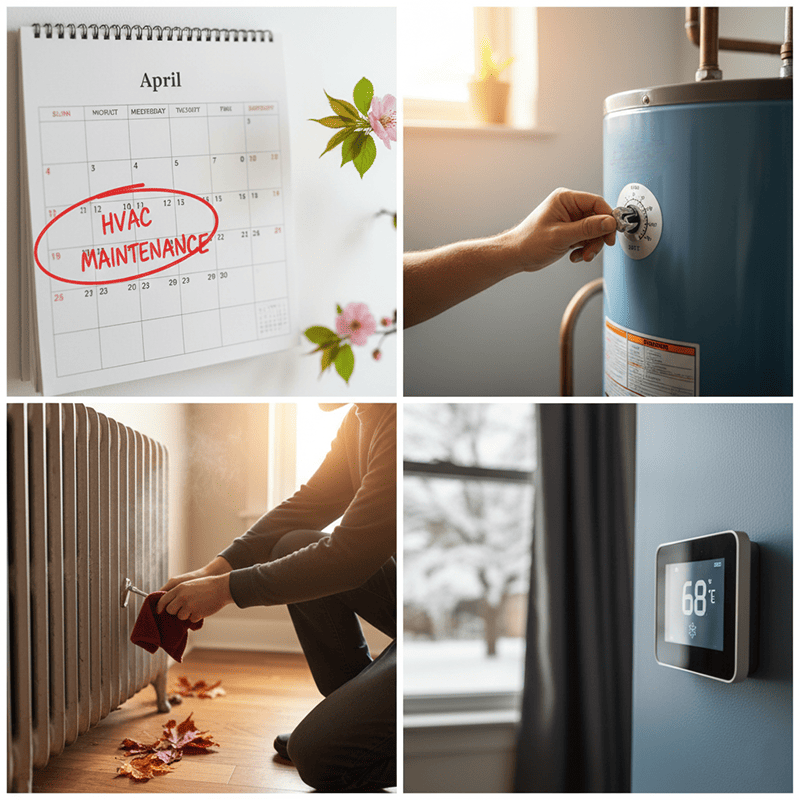
Spring: Reset, Inspect, and Plan Ahead
Spring is the ideal season to evaluate your heating performance and prepare for improvements while systems are idle. Start by inspecting your boiler, furnace, or heat pump after months of heavy use. Replace or clean filters, check for soot buildup, and inspect ductwork for dust or leaks. This ensures the system is ready for next winter without sudden failures. Next, check insulation in your attic and walls - any areas showing drafts or uneven temperatures should be upgraded while weather is mild. It's also the perfect time to schedule professional maintenance, as HVAC technicians are less busy and prices are often lower than in peak season.
Evaluate your thermostat data (if you use a smart model) to analyze trends - was your home overheated? Did certain rooms demand more energy? Use this data to optimize next season's settings. Finally, consider upgrading old systems in spring, when rebates and installation deals are most available. Taking action now locks in efficiency gains for the rest of the year.
Summer: Optimize for Efficiency and Upgrade
During summer, heating might be out of mind - but it's the best time to make structural improvements without urgency. Focus on insulation, as the same materials that keep heat in during winter also keep heat out during summer. Seal around windows, doors, and attic hatches to prevent energy loss in both directions. If your water heater runs year-round, lower its temperature to 120°F to save on fuel consumption. Clean and test your heating system early to avoid emergency repairs in winter.
Summer also allows for home energy audits - professionals can use thermal cameras to locate leaks invisible to the eye. Replace outdated thermostats with smart models and install zone control systems while equipment downtime makes upgrades easier. Additionally, inspect your roof and exterior siding for potential gaps that lead to air infiltration. Strategic improvements during the off-season translate into smoother performance and significantly lower bills later.
Fall: Prepare and Pre-Heat Smartly
Fall is the season to ready your home for active heating use. Begin by bleeding radiators, checking pilot lights, and ensuring vents and ducts are clear of obstructions. Adjust thermostat schedules in advance - start lowering temperatures gradually so your household adapts before peak winter arrives. This helps avoid overuse once cold weather hits. Perform a final inspection of insulation, especially around attic openings and basement ceilings. Clean or replace furnace filters to maintain airflow and efficiency.
If you use ceiling fans, reverse their direction to push warm air down into living spaces. Keep curtains open during the day to capture sunlight and close them at night to retain heat. Test your carbon monoxide detectors, as they play a crucial safety role in heating months. By fine-tuning systems now, you minimize sudden costs and ensure smooth operation when you depend on heating most.
Winter: Manage, Maintain, and Monitor
Winter is when heating costs reach their peak, but active management can cut expenses dramatically. Start by setting thermostats around 68°F during the day and lowering them slightly while you sleep. Use programmable or smart thermostats to automate this process. Focus on zone heating - close doors to unused rooms and block drafts with door sweeps or heavy curtains. Keep vents unobstructed for proper air circulation. Regularly replace filters to maintain system efficiency, as clogged ones can raise energy consumption by 10-15%. Don't overlook humidity: adding moisture through humidifiers makes air feel warmer at lower temperatures.
Monitor your energy usage weekly - most utility companies provide online dashboards for this purpose. If you have solar panels or a heat pump, adjust your usage patterns to maximize efficiency during peak sun or mild weather hours. In case of extreme cold, avoid constantly raising the thermostat; instead, focus on retaining heat through insulation and smart layering. Consistency and monitoring are the foundation of sustainable winter savings.
Checklist: How to Save Money on Heating
Cutting heating costs isn't about complicated strategies - it's about consistent execution of small, smart actions that collectively deliver major savings. This checklist summarizes the key steps that energy experts recommend to keep your heating system efficient and your comfort high. Whether you rent, own, or manage multiple properties, these practical actions apply to all types of homes and heating systems. Each task is simple enough to do today, yet powerful enough to lower your bills for years ahead.
If you've been overwhelmed by advice or don't know where to begin, treat this list as your personal roadmap. It's structured to help you act immediately, measure results, and refine over time. You can copy this checklist and start applying it right now - one step at a time is enough to see progress within your next billing cycle.
Real Cases: Homeowners Who Cut Heating Bills
Real experiences often prove what numbers alone can't - that with practical changes and consistency, heating costs can drop without compromising comfort. Below are four real-world stories of homeowners who applied different strategies, tracked results, and achieved measurable savings through discipline, not deprivation. Each case shows that there's no one-size-fits-all solution - only the right mix of habits, upgrades, and awareness.
Digital Tools and Apps for Save on My Heating Bill
Technology has revolutionized the way homeowners manage indoor comfort and energy efficiency. What used to require manual adjustments and guesswork can now be handled with precision through connected devices, automation, and data insights. Whether you live in an apartment or a detached home, the right digital tools can help you understand energy consumption patterns, prevent waste, and optimize heating performance around your daily routine. These innovations make it easier to achieve measurable savings without constant effort or loss of comfort. If you've ever asked yourself how to save on my heating bill using smart technology, the answer lies in choosing tools that not only track data but act on it - automatically, consistently, and efficiently. Below are five proven digital solutions that can transform how you control heat and manage costs year-round.
-
Smart Thermostats
They are the foundation of a modern, efficient home heating system. They allow precise control over indoor temperature based on occupancy, time of day, and even weather forecasts. Devices like the Nest Learning Thermostat, Ecobee, or Honeywell Home automatically adapt to your lifestyle, learning when to heat your home and when to reduce output. This level of automation eliminates wasteful heating cycles and ensures you never heat an empty house. Smart thermostats also provide real-time reports showing energy use trends and potential savings. Integration with mobile apps means you can adjust settings remotely - ideal for travelers or those with unpredictable schedules. With proper setup, users typically save between 10-15% on annual heating costs. The biggest advantage is consistency: once optimized, the system maintains comfort efficiently without requiring manual oversight. -
Energy Monitoring Systems and Smart Plugs
Energy monitors like Emporia Vue or Sense Home Energy Monitor go beyond thermostats by providing a full picture of your home's power consumption, including heating-related loads. These systems track usage per circuit or even by individual appliance, identifying inefficiencies such as high standby power or overactive devices. Paired with smart plugs, they allow remote shutoff of space heaters or fans that may run unnecessarily. The app dashboards visualize where your energy dollars go in real time, making it easier to spot wasteful patterns and adjust behavior accordingly. For homeowners using electric heating systems or hybrid heat pumps, this insight can lead to double-digit percentage savings. Over time, monitoring creates accountability - you see the direct result of each efficiency measure and can fine-tune your strategy month after month. -
Smart Radiator Controls
For homes with hydronic or radiator-based heating, smart radiator valves are one of the most underrated upgrades available. Brands like Netatmo, Eve Thermo, and Honeywell Evohome offer room-by-room temperature control without the need to replace your entire system. These devices regulate the flow of hot water into each radiator, letting you heat only the rooms you actively use. You can schedule heating zones individually or adjust them remotely through an app. This targeted heating reduces waste from unused spaces while maintaining comfort where it matters. In multi-room homes or apartments with uneven temperatures, the savings can reach 20-25%. Beyond cost efficiency, these controls also enhance comfort by eliminating hot and cold spots - making them both an energy and quality-of-life upgrade. -
tado° App
It stands out for its deep automation and location-based intelligence. It uses geofencing to detect when all occupants have left the house and automatically lowers heating to an eco-mode, then preheats rooms as you approach home. It also factors in outdoor weather data and building insulation characteristics to fine-tune performance. The tado° ecosystem includes smart thermostats, radiator controls, and sensors, creating a unified heating network across your home. Users receive detailed monthly energy reports and actionable insights, such as when their heating system could be running more efficiently. In independent studies, tado° users reported average heating bill reductions of up to 30%. The app's clean interface, compatibility with major smart home platforms, and self-learning algorithms make it an excellent choice for homeowners seeking a “set it and forget it” efficiency solution. -
heatapp!
It cater to users who prefer full flexibility and integration with smart home ecosystems. heatapp! focuses on wireless, multi-room heating control that can manage up to 50 zones simultaneously. It supports detailed scheduling, individual room monitoring, and remote configuration - ideal for large homes or office setups. Users can visualize real-time energy consumption and receive alerts if temperatures exceed or drop below defined thresholds. These platforms help prevent energy waste and promote sustainable habits. Most importantly, it put data-driven control in your hands, letting you see immediate results and stay on top of heating efficiency with minimal effort
Together, these digital tools offer flexibility, automation, and precision - transforming how you manage heating from guesswork into informed control. By combining smart hardware with intelligent analytics, you can maintain comfort, extend equipment life, and cut costs year-round.
Myths and Realities: What Really Works to Save on the Heating Bill
When it comes to heating efficiency, misinformation spreads faster than warmth. Many homeowners rely on outdated advice or quick “tricks” that either do nothing - or worse, increase energy use. It's easy to confuse comfort with effectiveness, and small misunderstandings can cost hundreds of dollars every year. Understanding what actually works requires separating long-standing myths from proven facts backed by data from energy experts and the U.S. Department of Energy. The following section debunks six of the most common heating misconceptions that continue to circulate. Each explanation is grounded in real efficiency science, showing what saves money, what doesn't, and how to make smarter heating decisions moving forward. Remember: the goal isn't to heat less - it's to heat smarter, safer, and with measurable results that stay consistent over time.
| Myth | Reality & Expert Explanation |
| Myth 1: Leaving the heat on low all day saves more than turning it off. | Reality: This is one of the most persistent myths in home energy management. In truth, keeping your heating system running all day at a constant low temperature wastes more energy than cycling it strategically. Heating an empty home - even slightly - adds up over hours. Modern systems reheat spaces efficiently, especially with programmable or smart thermostats that time preheating before you return. The U.S. Department of Energy confirms that lowering your thermostat by 7-10°F for eight hours daily can reduce heating costs by 10%. Heat loss depends on temperature difference, not runtime - so the smaller the gap between indoor and outdoor temperatures while you're away, the less energy escapes. Efficient reheating is always cheaper than constant operation. |
| Myth 2: Space heaters are an economical alternative to central heating. | Reality: Portable space heaters are only cost-effective in very specific cases - such as heating one small occupied room for short periods. However, using multiple space heaters to warm larger areas is significantly more expensive than running a well-maintained central system. Electric heaters convert energy directly to heat, but at a high cost per kilowatt-hour. In contrast, furnaces and heat pumps distribute heat more efficiently per unit of energy. Moreover, space heaters pose safety risks and increase peak electrical demand. For long-term savings, it's better to fix distribution issues or zone your central heating system rather than rely on plug-in heaters. |
| Myth 3: Cranking the thermostat higher warms your home faster. | Reality: Thermostats don't control heat speed - they control the final temperature. When you set it to 80°F hoping to “speed up” heating, the system simply runs longer, overshooting comfort levels and wasting fuel. Furnaces and boilers operate at a fixed output rate; they don't accelerate because of a higher setting. This habit causes systems to run inefficiently and can even trigger uneven heating cycles. The smarter approach is to use programmable thermostats or gradual adjustments - raise temperatures by 2-3°F at a time. Maintaining stable comfort with slow, controlled changes keeps equipment efficient and extends its lifespan. Patience saves energy, while impatience burns dollars. |
| Myth 4: Closing vents in unused rooms saves energy. | Reality: While it seems logical to shut off heat to empty rooms, most forced-air systems are designed to balance pressure across all ducts. Closing vents increases air pressure, forcing the system's blower motor to work harder and creating leaks in ductwork over time. This can raise - not lower - energy use and even shorten equipment life. The correct approach is zone heating, where thermostats or smart dampers control heat distribution safely and efficiently. If your home doesn't have zoning, focus on insulating unused spaces instead of sealing vents. Maintaining proper airflow ensures the system runs smoothly and evenly distributes heat without strain. |
| Myth 5: Windows are the biggest source of heat loss. | Reality: While windows can contribute to heat loss, they usually account for only 10-15% of a home's total heat escape. The real culprits are poorly insulated attics, walls, and floors, which together can account for over 50% of total loss. Spending thousands on new windows rarely delivers the same return as upgrading insulation or sealing air leaks. Instead, add weatherstripping, use thermal curtains, or install window film for cost-effective results. Prioritizing insulation over window replacement provides faster payback and dramatically improves overall heating efficiency. The “windows first” myth persists because window upgrades are visible, but the invisible improvements behind walls are what truly lower bills. |
| Myth 6: Older heating systems are always inefficient and must be replaced. | Reality: Age alone doesn't determine efficiency - maintenance does. A 10-year-old furnace that's regularly serviced can outperform a newer, neglected model. While modern high-efficiency systems (like condensing furnaces or heat pumps) do save energy, replacement should be based on condition, fuel type, and runtime efficiency, not just age. Cleaning burners, replacing filters, sealing ducts, and calibrating thermostats can restore 5-15% of lost performance instantly. If your system is over 15-20 years old, evaluate its Annual Fuel Utilization Efficiency (AFUE) rating and compare potential savings before replacing. Upgrading prematurely without correcting insulation or airflow issues often wastes more money than it saves. Preventive maintenance remains the cheapest path to efficiency. |
By breaking these myths, homeowners gain control over what truly drives their heating costs. The key takeaway: efficient heating isn't about doing more, but about doing smarter. With clear understanding and consistent action, any home can maintain comfort while achieving long-term energy savings.
Conclusion
Cutting heating costs isn't about discomfort or drastic sacrifice; it's about disciplined control over how heat is produced, moved, and retained in your home. Thermostat schedules, air sealing, and right-sized maintenance form a reliable core - then smart zoning, insulation upgrades, and targeted habits multiply the effect. Treat heat as a managed asset, not a background utility. Track results month to month, and you'll see that small, consistent improvements compound into stable comfort and predictable bills. The most resilient savings plans are boring by design: they work every day, in any weather, with minimal attention.
If you've been searching for how to save on heating, anchor your plan to three pillars: (1) precision control (programmed setpoints, modest setbacks, room-by-room targeting); (2) a tight envelope (seal leaks, insulate, use thermal window coverings); (3) preventive care (filters, tune-ups, duct sealing). Layer simple daily behaviors - closing doors, clearing vents, using sunlight - with periodic upgrades - smart thermostats, high-efficiency equipment. The result is comfort that costs less, equipment that lasts longer, and a home that holds warmth where it belongs.
Frequently Asked Questions
Which insulation upgrades give the biggest heating savings?
Start at the top: the attic/loft typically delivers the fastest payback because warm air rises and escapes through the roof. Bringing attic insulation up to current standards (often R-38 to R-60 in colder regions) can trim heating demand by 10-20%. Next, address air sealing around the attic hatch, top-plate gaps, and penetrations - stopping uncontrolled airflow raises the value of every insulation dollar. Exterior wall insulation (dense-pack cellulose or foam) adds another 10-15% in many homes, especially pre-1980 construction. In basements and crawl spaces, insulate rim joists and add rigid foam to foundation walls to cut conductive losses and cold-floor discomfort. Don't overlook pipe and water-heater insulation: reducing standby losses keeps heat where you use it. Prioritize measures by payback: air sealing → attic → rim joists/basement → walls → high-performance windows (often last). A home energy audit with blower-door testing pinpoints the most cost-effective sequence for your house.
Best smart thermostat settings to cut winter heating costs
Begin with 68°F (20°C) when you're home and awake, then schedule setbacks of 7-10°F while you sleep or are away for 6-8 hours. Program a gentle pre-heat so rooms reach target temperature shortly before you wake or return - no need to “crank” the thermostat. Use occupancy detection/geofencing to avoid heating an empty home, and enable weather-adaptive features that reduce run time on milder days. If you have a heat pump, keep setbacks modest (2-4°F) to avoid triggering inefficient electric resistance backup. Maintain 35-45% indoor humidity; air at proper humidity feels warmer and allows slightly lower setpoints. Review weekly energy reports to fine-tune schedules, and pair the thermostat with smart radiator/vent controls for room-level precision. The aim is consistent comfort with the least runtime, not aggressive swings.
What should I put my heat on to save money?
There isn't a single magic number, but a practical baseline is 68°F (20°C) when occupied and awake. Lower it to 60-65°F (15-18°C) during sleep or extended absences, using programmed schedules so comfort returns before you need it. Households with infants, elderly residents, or health concerns may prefer 69-71°F while balancing costs via better air sealing, insulation, and humidity (35-45%). Focus on perceived warmth: eliminate drafts, use thermal curtains at night, and run ceiling fans on low in reverse to push stratified warm air down. These steps let you keep setpoints slightly lower without feeling colder. Track bills for two cycles after adjustments; if comfort is stable and costs fall, you've found your optimal setting.
Does turning off heat at night save money?
Turning it fully off can cause excessive temperature swings, condensation risks, and longer recovery times - especially in leaky or poorly insulated homes. A setback is the efficient middle ground: lower your thermostat by 7-10°F overnight or during predictable absences. This reduces the temperature difference between indoors and outdoors, slowing heat loss and cutting runtime by up to ~10% over a season. For heat pumps, use smaller setbacks (2-4°F) to avoid engaging electric resistance strips; many smart thermostats have a “heat pump optimization” mode. Ensure bedrooms stay comfortable with draft control and proper bedding so you're not tempted to override schedules. The strategy is controlled reduction, not on/off extremes - steady, planned setbacks save money while preserving comfort and system health.
What temperature to set heating overnight?
Aim for 60-65°F (15-18°C) for most healthy adults, adjusting for personal comfort and insulation quality. Start by dropping 5°F from your daytime setting and evaluate sleep quality and morning comfort for a week. Use a pre-heat window so living areas reach your wake-up target on time. If rooms feel chilly at lower setpoints, address drafts first: door sweeps, weatherstripping, and heavy curtains often improve perceived warmth more than raising the thermostat. Maintain moderate humidity (35-45%) - proper moisture reduces “dry cold” sensation and allows lower setpoints. For homes with radiant floors or high-mass systems, keep smaller overnight adjustments to avoid long recovery times; prioritize consistent scheduling and envelope tightness.
Is it cheaper to leave your thermostat at one temperature?
In most forced-air and boiler systems, no. Heating costs correlate with the average temperature over time; reducing setpoints when heat isn't needed lowers the average and saves energy. Leaving the thermostat fixed keeps the temperature difference (ΔT) large all day, accelerating heat loss through walls, windows, and ceilings. Planned setbacks shrink ΔT during sleep/absence periods and cut runtime. Exceptions: certain heat pumps and radiant/high-mass systems perform best with modest, not extreme, changes - use smaller setbacks (2-4°F) and let the system's controls handle gradual adjustments. The efficient rule of thumb: maintain comfort when occupied, reduce gently when not, and pair this with air sealing, insulation upgrades, and balanced humidity. That combination delivers the largest, most reliable savings on actual bills.

Daniel Ortiz
Cost Optimization Coach | Turns everyday spending habits into smart strategies that build long-term savings

Olivia Chen
Smart Budgeting Advisor | Helps people master digital tools to budget smarter